
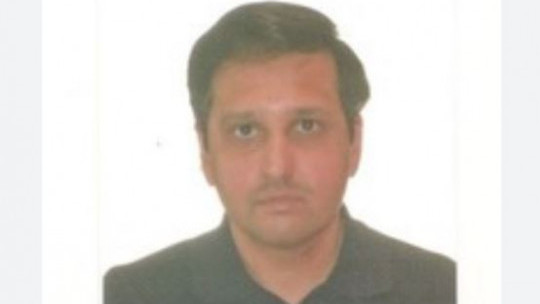
Trinidadian attorney and historian Dr. Sanjay Badri-Maharaj has described as "gestures of loyalty", the positions taken by Jamaica, Guyana, Trinidad and Tobago and other US allies in the vote to condemn the economic embargo against Cuba.
Jamaica, Guyana and Haiti were among 25 countries that chose to abstain, while Trinidad and Tobago and 16 others voted with the US to oppose the resolution.
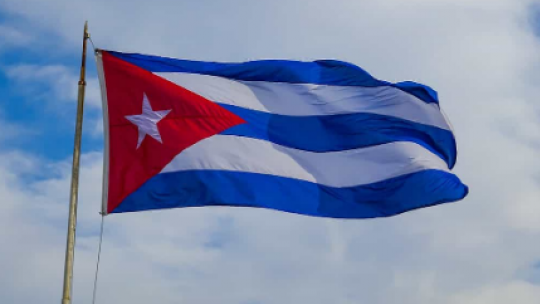
The UN General Assembly overwhelmingly voted to condemn the embargo for the 34th consecutive year, passing the resolution with a vote of 130 in favour.
Dr. Badri-Maharaj said he understands the Jamaican government's decision to abstain, but he struggled to rationalise Trinidad and Tobago voting with the US against the resolution.
"I understand the need to placate the United States. I do. It's unfortunate, but we have to placate them. I understand Jamaica's vote, the abstention. I understand Guyana's vote, the abstention. So I understand the abstentions. I do not understand Trinidad voting with the United States, unless it is more aimed at a broader issue between Trinidad and Venezuela - they need the Americans to facilitate as much as possible the energy interactions between Trinidad and Venezuela, because Venezuela now has now turned on the Cubans. So I suspect that was at play," he reasoned.
Jamaica's abstention was acknowledged as a shift in policy from previous years.
Meanwhile, Trinidad and Tobago Prime Minister Kamla Persad-Bissessar has defended her country's decision to vote against the UN General Assembly resolution calling for an end to the US economic embargo on Cuba, arguing that the exploitation of ordinary Cubans to finance the lavish lifestyles of the country's ruling dictatorship must end.
Mrs. Persad-Bissessar said the Cuban people continued to endure suffering and hardship while the leaders of the country's military regime and their families enjoyed lives of luxury.
In a statement posted on social media, the Prime Minister said Trinidad and Tobago's decision reflected her government's firm and unwavering commitment to democracy, freedom and the fundamental rights of all people.
She reiterated that Trinidad and Tobago would not support military dictatorship in Cuba, noting that the United States government has been spearheading a campaign for democracy in Cuba.
In the meantime, Dr. Badri-Maharaj, who described those who opposed or abstained as allies of the US, added that it was surprising that certainly European countries took that route.
"It's one thing to abstain, it's another thing to support it. I do not particularly like supporting this resolution, but I find it more than a little interesting the nature of the countries that have supported the United States. You have some that are very ideologically allied to the United States, and this is like Argentina, to some extent Colombia under its new regime and perhaps Ecuador. But some of the others, Hungary is not particularly close to Trump right now. Lithuania, surprising. Ukraine voted with the United States, and that is all the more interesting considering the fact that you would like to think Ukrainians would have stood up to bullying by a much larger country. I think it's simply trying to placate the United States," he reiterated.
He said the vote is also a clear demonstration that CARICOM countries operate in isolation in relation to their foreign policy.
"We need to dissuade ourselves from the fiction that CARICOM is anything other than a talking shop of reasonably friendly countries. So I didn't expect that. One would have expected though that it could have been raised and a joint decision taken, yes the Americans are pressuring us, but let's take a stand and just abstain and stay out of this. And on top of that, issue a joint statement calling, one, we don't think the embargo is right; two, we think that Cuba could democratise and CARICOM stands willing to assist in that democratisation process. But I cannot see CARICOM ever being brave enough to do that," the historian and attorney said scathingly.
Dr. Badri-Maharaj contended that the survival of the embargo is indefensible, adding that the US has been more than willing to accept far more brutal regimes in other jurisdictions, but has drawn a line in the sand with Cuba.
"It is obscene that the embargo on Cuba still exists, considering the fact that the United States has palled up to countries that are far more oppressive, far more brutal, far more totalitarian," he suggested, pointing to China, North Korea, and Vietnam. "So the fact is, the United States is more than willing to condone dictatorships, but seems to have this bugbear about Cuba."
But the Trinidadian acknowledged that the blockade gives the Cuban government an excuse not to pursue rigorous economic and political reforms, which he believes are "necessary for any country to survive in a post-1991 era".
"So in a real sense the embargo itself keeps that regime there. I cannot understand the logic of this embargo and I never will. Let us be very clear. A bad democracy is way better than any dictatorship. The thing is that Cuba needs to democratise and needs to introduce long-term economic reform so it can bring itself back to the standard we know it could achieve. I mean, Cuba could be the regional powerhouse," he asserted.
The Bahamas, Barbados, Belize, Grenada, St. Kitts and Nevis, St. Vincent and the Grenadines and Suriname supported the UN resolution condemning the US economic embargo against Cuba on Wednesday. Antigua and Barbuda, Dominica and St. Lucia did not vote.
comments powered by Disqus





 All feeds


