
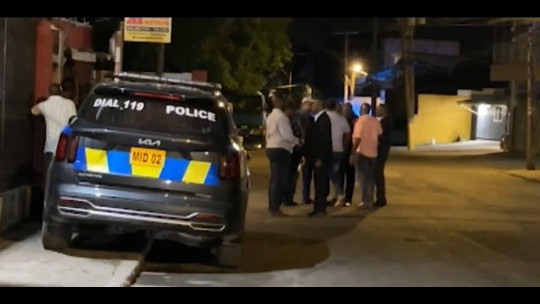
In the latest mass shooting, five men were killed in two attacks on Waltham Park Road in St. Andrew on Monday, November 25.

Kemon White reports
By Kemon White
Following the most recent mass shooting on Waltham Park Road, St. Andrew, which resulted in the death of five men, there is a call for family members of victims and those close to the ordeal to monitor their mental health.
Mass shootings have been thrust into the spotlight, following a spate of such incidents in the span of about three months.
On August 11, eight people were killed and nine others wounded when gunmen opened fire at people gathered at a party in Cherry Tree Lane, Clarendon.
The country was again jolted by another mass shooting at a football match in Rockfort, East Kingston on October 21. Five men were killed in that incident.
In the latest incident, five men were killed in two attacks on Waltham Park Road in St. Andrew last Monday, November 25. In the first attack, one man was killed at his family's business place. This was followed by an attack at a bar where the four other men were killed.
When Radio Jamaica News visited the community last Wednesday, a resident said she has not left her house since Monday night's incident.
"I'm scared to go up the road. I'm scared. From I bring my granddaughter to school Monday, I don't go back through the gate," said the woman.
Clinical Psychologist Debora Smith said approximately 28 per cent of people who have experienced a mass shooting develop post-traumatic stress disorder (PTSD).
PTSD is a mental health condition that can develop after a person experiences or witnesses a traumatic event.
"Being exposed to a traumatic event of that level, it does something to people. So the first couple of days, leading up to about two to three weeks after, the person will suffer from a lot of anxiety. They worry all the time. Any little sites or sounds or smells that remind them of what happened during the mass shooting, it puts them in a state of panic. They have issues sleeping. They'll have issues even just talking about it, trying to remember it," she explained.
According to the American Psychological Association, fear of mass shootings has left a large majority of Americans feeling stressed, including a third of adults who say they now avoid certain places and events.
The association says psychological reactions vary and are based on factors such as age, trauma history, and proximity to an incident.
Ms. Smith further noted that family members of victims are also susceptible to developing PTSD.
"They start to worry excessively about everybody around them, about their safety. Is this the last time I'm going to see them if they leave the house? Will they die all of a sudden? Will there be a mass shooting happening when the person leaves the house and then the next thing you know I'm hearing that they're dead?"
The clinical psychologist said mass killings can also take a mental toll on the wider public.
Frontline workers responding to these traumatic incidents may also develop PTSD.
"You can still be traumatised because you are witnessing the aftermath of it and also listening to the reports of people who were on the scene and they witnessed what happened. So the people on the frontline, the people in the media, they need to have that in the back of their mind that they are not immune to it. Just because they're used to seeing it, it doesn't mean that they're not being affected by it quietly because it can build up over time," she warned.
She encouraged those struggling to cope with traumatic events such as mass shootings to seek professional help.
comments powered by Disqus




 All feeds


