
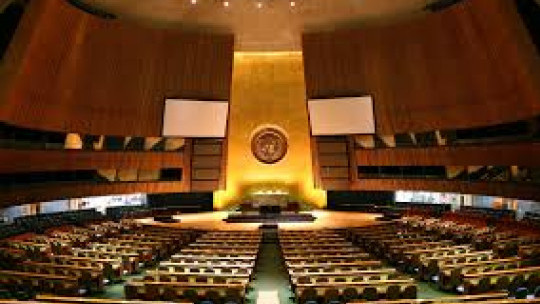
The latest UNGA vote on the Cuban embargo took place on October 28
Former Prime Minister P.J. Patterson and the current Foreign Minister, Kamina Johnson Smith, have taken strikingly differing positions on the recent abstention by Jamaica in the vote at the United Nations General Assembly calling for the lifting of the American economic embargo on Cuba.
Jamaica abstained from voting, a break from the country’s tradition of voting in support of the resolution every year since it was first held in 1992.
Patterson, who served as Prime Minister of Jamaica from 1992 to 2006, characterized last month’s departure from that record as “an abominable betrayal which history will never forget.”
Johnson Smith, in a sharp response, said the former prime minister’s written statement on the matter Cuba lacks factual basis and instead relies heavily on emotions, mischaracterisations, and conclusions that do not withstand scrutiny.”
When the latest vote on the Cuban embargo was taken at the UN last Wednesday (October 28), 130 nations voted for it to be lifted, 17 voted against, and 25 abstained. Jamaica was among the abstentions.
The former prime minister, setting the vote in stark historical terms, said Jamaica’s stance was “a day of shame for the land of Marcus Garvey, and a stain on the record of a nation which, before we had even raised our own flag, closed its ports to trade with apartheid South Africa.”
That tradition of international solidarity, he said, was “an unequivocal declaration that the Jamaican people, though a small nation, would not support the oppression of others.”
But, according to him, by voting as it did on October 28, “Jamaica's Government trampled that tradition.”
That was particularly puzzling, he said, given that the previous day, Tuesday, 27 October, the House of Representatives passed, “without dissent,” a resolution on the economic and humanitarian situation in Cuba.
“It was the Government's own resolution, brought to the House by the Minister of State in the Ministry of Foreign Affairs. In moving it, he declared that Jamaica could not support a unilaterally imposed blockade against Cuba,” Patterson reiterated.
Against that background, he declared the abstention at the UN the following day was “deplorable flouting of Parliament's constitutional authority, the highest expression of the will of the people in our democracy.”
No change
In her written response on Sunday, Johnson Smith insisted that Jamaica has not changed its opposition to the embargo and remains “concerned about its impact on the Cuban people and value our longstanding friendship and cooperation with their country.”
What has changed, she said, was the government’s assessment of “whether continued support for an annual resolution addressing only one dimension of Cuba's circumstances represents the most constructive approach.”
“Mr. Patterson's suggestion that an abstention amounts to support for the embargo, or silence in the face of Cuban suffering, is simply incorrect,” she asserted.
Reiterating that the UN system offers three voting distinct approaches – For, Against and Abstention, she said that by abstaining, Jamaica did not vote against the resolution, and formally explained the country’s position immediately after the vote.
“Our Ambassador and Permanent Representative to the UN expressly acknowledged the contribution of external economic restrictions to Cuba's difficulties, while also recognising the domestic economic and structural challenges affecting the country. Jamaica called for reduced restrictions, constructive engagement and Cuba's greater integration into the international economic system,” she said.




 All feeds


