
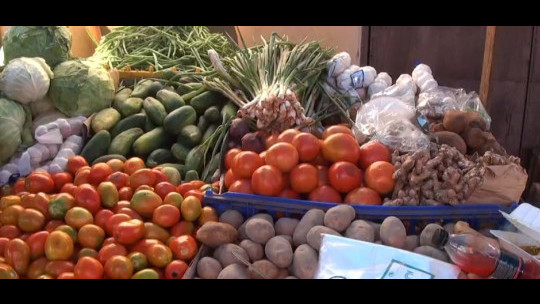
File photo
.png)
Errard Stephenson, RADA Parish Manager for St. Thomas
The Rural Agricultural Development Authority (RADA) has signalled that farmers in St. Thomas are prepared to respond to the call from Prime Minister Dr. Andrew Holness to ramp up production.
This, even though farmers in St. Thomas suffered major losses during the passage of Hurricane Melissa.
Despite the losses, RADA St. Thomas Parish Manager Errard Stephenson says 425 hectares of land will be brought into production. He says some 1,900 farmers will be sensitised in an effort to boost production in the parish.
"We are pledging our support to them, our tangible support, that will be coming from the ministry soon and very soon to indicate to farmers that this is the way forward. They are looking to us, so we have to dig deep and make sure we are ready to go. We will be getting some amount of help in terms of seeds, hopefully fertilisers and pesticides. We are also asking them for land preparation subsidy so we can prepare farmers' lands for them as quickly as possible to get back into production."
Mr. Stephenson said fruits and vegetable production will be ramped up across the parish.
"So, onion production is onboard. Last week we planted 19 hectares after the hurricane. For the eastern belt, Golden Grove, Winchester, Wheelersfield, Duckenfield, Holland Bay, those areas were looking for vegetable production. Those areas are known at this point for cassava production, sweet potato production, banana and plantain, hot pepper, water melons, papaya. We are thinking that we will want to increase vegetable production - sweet peppers, lettuce, cabbage, pak choy, cucumber - we would want to increase those, but at the same time we are not losing sight of what is already there. We want to ramp up production of those also," he explained.
St. Thomas is estimated to have suffered more than $1.5 billion in agricultural losses during the passage of Hurricane Melissa.
Mr. Stephenson said some 4,000 farmers were affected, losing crops such as cassava, peppers, vegetables, melons, cucumbers and onions.
Where livestock is concerned, he said 1,900 farmers lost about 15,000 animals, including chickens, pigs, cattle, and sheep. Additionally, some 1,500 bee colonies were lost in the storm.
comments powered by Disqus







 All feeds


