
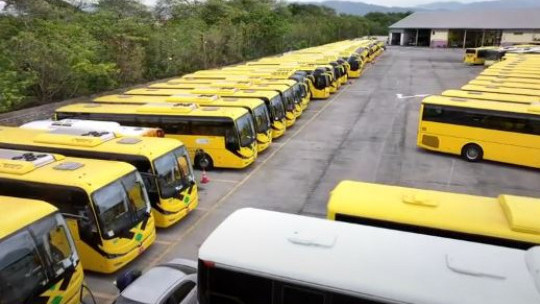
Ninety-three new buses were handed over to the JUTC on Wednesday, while the other seven buses are being outfitted to facilitate members of the disabled community.
.png)
The fleet of the Jamaica Urban Transit Company (JUTC) received a further boost on Wednesday with the official handing-over of 93 of the promised 100 new buses to the state-owned company.
The remaining seven buses are being outfitted to facilitate persons with disabilities.
Speaking at the handing-over ceremony on Wednesday, Transport Minister Daryl Vaz said the new units will help with the high demand for JUTC's services during the September back-to-school period.
Mr. Vaz again defended the government's plan to boost the fleet of the JUTC and to reduce the misery index of commuters.
Some 200 buses have been purchased over the past two years.
He also defended the roadworthiness of the JUTC fleet and the units imported for the government's rural school bus system which have sparked controversy.
"Of the fleet buses deployed by the JUTC, today 71 per cent of the total buses are new buses, which were obtained between [20]23 and 24. That simply means Prime Minister, that we have more new buses in the JUTC fleet than used buses," said the minister.
Noting that he wanted to "diffuse a lot of the propaganda", he added that: "The average age in the public transportation system for public passenger vehicles is 14 years old. The average age of buses...is an average of 18 years. The average age of the JUTC fleet before the introduction of these 270 buses was 14 years. The average age of the school buses that are going to be rolled out in September is 10 years. So the school buses are the newest used vehicles in the transport sector in Jamaica, bar none."
Meanwhile, Mr. Vaz declared that the state-owned bus company is experiencing significant improvements in its revenue intake following the switch to cleaner fuel.
"Of the buses deployed daily, the JUTC operates 110 CNG (compressed natural gas) buses, six battery electric buses and one range extender electric vehicle. This means 53.6% of JUTC's operable fleet now run on cleaner, lower emission technologies. The average monthly fuel cost per diesel bus is $1 million, compared to J$350,000 per CNG bus. That's a savings of J$650,000 per bus. Multiply that by 100 and you'll get the figures, $65 million, just on fuel savings," he outlined.







 All feeds


