

Contractor General Dirk Harrison - file photo

The move to create a single anti-corruption agency in Jamaica is still causing uncertainty for workers at the Office of the Contractor General (OCG).
Justice Minister Delroy Chuck has said that workers at the OCG, the Corruption Prevention Commission as well as the Integrity Commission could be displaced when the merger takes effect.
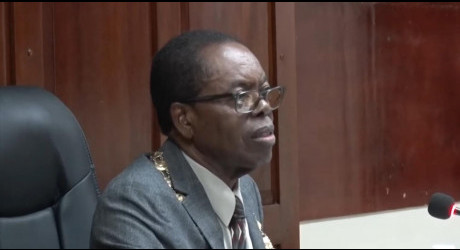
But speaking Wednesday night on TVJ's All Angles, Contractor General Dirk Harrison said the workers are particularly worried because they have not been informed of the timeline for the merger of the three entities.
"We have had at least two reports from the minister, Mr. Chuck, in terms of persons (losing) their jobs. We've heard that persons will go into the courts office, we've heard that persons will go into various offices, and then earlier this year, Honourable Mr. Chuck indicated that the office doesn't even have enough people," he said, highlighting the uncertainty.
"I would want to know that all three offices, all the staff in all three commissions are spoken to by the implemeting ministry to advise, this is the timeline, this is what will happen, it will happen this way, this is how you'll be affected," he asserted.
Mr. Harrison said he was informally advised by the chairman of the Economic Growth Council (ECG) that the merger should be completed by October in keeping with the International Monetary Fund (IMF) agreement.
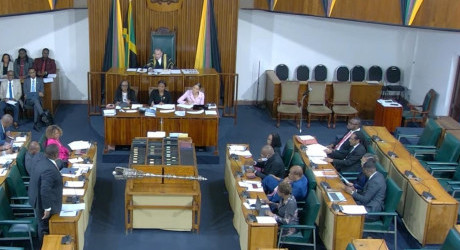
The Integrity Commission Act, which will establish the single anti-corruption body, was passed in the House of Representatives last month.
The new body will be known as the Integrity Commission.
It will be tasked with investigating and prosecuting corruption in Jamaica.
Weakening of powers
Meanwhile, the Contractor General said the model for the single anti-corruption agency will result in a weakening of the powers of the OCG.
Mr. Harrison pointed out that under the new legislation, the new agency will not be able to take the Director of Public Prosecutions (DPP) to court, such as it did in the case of Shernette Haughton, former Mayor of Hanover, where the two entities disagreed on whether to prosecute.
"What we see in the new piece of legislation is a little provision saying, if you ask the DPP for an opinion and she disagrees, her decision is final and binding. Why?" Mr. Harrison questioned.





 All feeds


