


By Kimone Witter
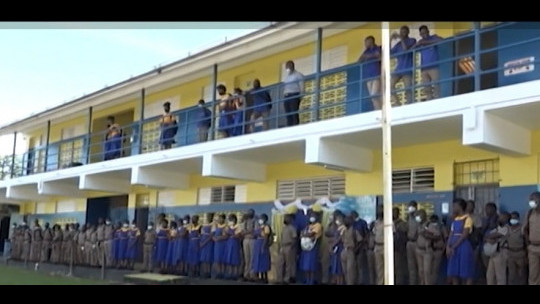
There is a call for national discourse on religion within Jamaica's education system.
It comes from Founder and Executive Director of the Jamaica Association of Debate and Empowerment (JADE), Germaine Barrett.
Mr. Barrett was speaking in an interview with Radio Jamaica last Thursday following debates among teachers' colleges from across the island.
The debates centred on whether devotional exercises should be mandatory in schools and whether churches that own schools should have greater governance control than government– the major financier of education.
Mr. Barrett asserted that these questions are central to how education is arranged and the rights of students.
"And of course, broader issues surrounding whether the church's controlling interest within the schools, whether or not it is harmful to the overall development of our students. [These are] fundamental issues that I think need to be expanded upon and deliberated, discussed, debated at a larger national level," he suggested.
Meanwhile, Adesuwa Omoregie, a senior teacher at Church Teachers' College in Mandeville, has questioned the alternatives to devotions in schools, which she said are designed to encourage respect, values and good attitudes.
"If we continue to live this Christian principle - I'm not just talking about talking about it - living the Christian principle, then we will be good role models for our young people. And then we are spending so much money for psychosocial activities, but if only we just zero and put in our energy into this Christian principle and living it, most of our problems that we're having in our schools will be solved," she contended.
La Sonja Harrison, President of the Jamaica Teachers' Association, recently declared that devotional exercises must be retained in schools.
The Ministry of Education has issued guidelines for devotions, which also call for them to be inclusive, age-appropriate and sensitive to students of various backgrounds.
comments powered by Disqus






 All feeds


