
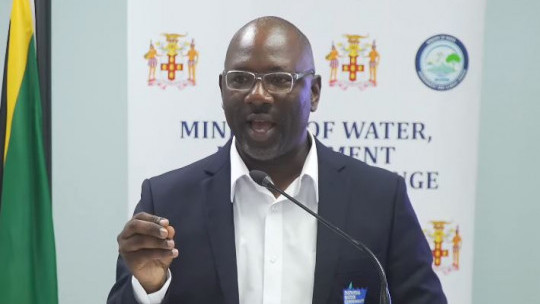
Delano Williams, Corporate Public Relations Manager at the NWC

Delano Williams, Corporate Public Relations Manager at the NWC
By Prince Moore
The National Water Commission is defending its request for a 51 per cent increase in water rates, which is now before the Office of Utilities Regulation (OUR) for consideration.
The request has faced strong opposition from the parliamentary opposition and members of the business community.
However, the NWC's Corporate Public Relations Manager, Delano Williams, says the proposed increase is necessary because the commission's operating expenses exceed its income.
He says the adjustment is needed to help the utility company meet its financial obligations.
"What has compounded it is just the reality since the last tariff that we have gotten, which was also what is called an interim tariff by the Office of Utilities. Now, what that means is that we've had six to seven years of no increases while our operational costs have increased, meaning the cost of raw materials, the cost of operating businesses with over 1,000 facilities, of pumping water and paying for our electricity costs and so on. All of those have risen, just the same way we've seen the normal things in our supermarkets and so on now moving or have moved over the past few years. But we have not had an increase in revenue, which is to buffer us against these realities. So we've come to this very hard point," he admitted.
Mr. Williams said the NWC also has several projects planned that will require additional funding: "To provide reliable water supply now, or to catch up with the number of years that we did not have reasonable levels of investment in supply in terms of either replacing or upgrading the system, and also to extend the network, whether it is to meet the Vision 2030 goes to get to 85 per cent of coverage for the numerous communities that still do not have access to piped water or, for instance, the ones that have been impacted by whether Hurricane Beryl or Hurricane Melissa in 2025."
"Those systems now need a level of what you call resilience or redundancy that we can buffer against unforeseen natural disasters, against the drought that we are now experiencing. All of that means that investment is necessary to maintain and upgrade a system," he noted.
Mr. Williams was speaking Wednesday on Radio Jamaica's Beyond the Headlines.
comments powered by Disqus




 All feeds


