
.png)
Prime Minister Dr. Andrew Holness is warning consumer to brace for higher food prices and increased service costs.
He says the expected increases are being driven by the ongoing conflict in the Middle East, worsening drought conditions and the devastation caused by Hurricane Melissa.
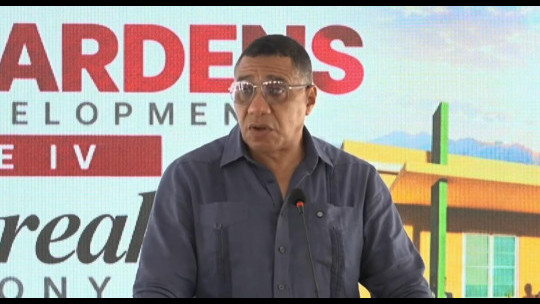
Speaking Wednesday during the groundbreaking ceremony for the Luana Gardens Housing Development in St. Elizabeth, Prime Minister Holness said the administration is now implementing measures to combat the crisis facing Jamaicans.
"You're dealing with a drought that has impacted agriculture, which means food prices are going to rise and those impacts of the destruction of value amounting to 57 per cent of our economy. That must have a significant drag on the economy. Already, the government has adopted counter-cyclical measures.
"The economist will tell you the economy has cycles. It goes up in a boom and then it comes back down and then it goes up. As long as the trend is upward then you are fine, but when the trend starts to dip over a certain number of cycles, you begin to worry. So the government can take measures to counter the natural cycle of the economy. And that's what we call counter-cyclical. The basic understanding of it is the government can spend more, the government can relieve taxes, the government can reduce interest rates," he explained.
Prime Minister Holness outlined some of the other measures being considered, including the speeding up and bringing forward planned capital investments.
"NaRRA is designed as a counter-cyclical tool for the private sector to give an incentive to persons who are planning to make investments, to make them within the lifetime of NaRRA because you're going to benefit from the speed of implementation. That means that profits that you would make in five years, you can make those profits now and do something else to make the profit that you would make in five years, so you would be double better off. So this is also one of the counter-cyclical measures that we will be pursuing."
He continued: "We will be actively going to every parish council to say, let me say the applications that you have. Every government ministry, let me say the projects that you have. And I will be meeting with the private sector to hear what are the projects that they have, so we can bring forward the investment."
Opposition not convinced
Meanwhile, the parliamentary opposition has responded to the Prime Minister's comments, accusing his administration of implementing a tax package that is causing a recession and stifling businesses on the island.
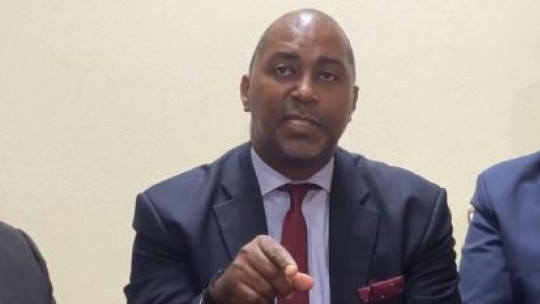
Speaking on Radio Jamaica's Real Business with Ralston Hyman on Thursday, Opposition Spokesman on Finance Julian Robinson said the measures articulated by Dr. Holness will be extremely difficult to execute in light of the global crisis.
He argued that the tax package has removed much needed finances out of the economy.
"We have seen the case of Serge Island, they have laid off 140 persons. They have indicated weak demand, which is not surprising because if demand is already falling and you impose taxes, you're taking money out of the economy. And I mean, again, that's not rocket science. And then you're seeing other sectors that are in trouble - BPO, which is one of the largest sectors, both from the perspective of a lack of competitiveness in Jamaica and the impact of artificial intelligence. Ibex is closing Jamaica locations, but opening in other countries. So the question is why are we not competitive in Jamaica? And what are we doing?" he questioned, insisting tangible steps must be taken "to move further up the value chain so you're not susceptible to the advent of AI and other technology".
Mr. Robinson warned business operator and consumers to brace for a major decision by the Bank of Jamaica's Monetary Policy Committee on Monday.
He suggested the Monetary Policy Committee will likely have to increase its interest rate.
"I mean, apart from inflation, we're seeing all the other central banks on the world are increasing rates. That is going to slow down the recovery because it means businesses that have loans will pay back more, consumers who have, whether it car loans, mortgages, credit card debt, they're going to have to use more of that money to pay down debt versus spend in the economy. Every week we're seeing increase in gas prices. And again, I've said while the government may not control the price of oil, there's a lot more that we should do on renewables and we should have been much further advanced in terms of the percentage of renewables that are added to the grid," he argued.
comments powered by Disqus






 All feeds


