
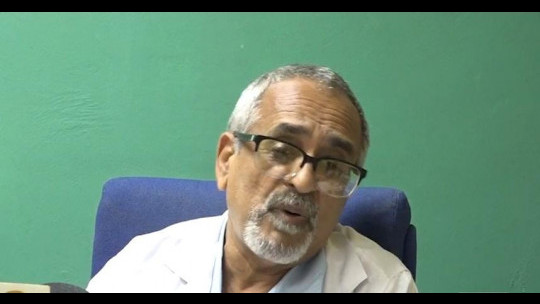
Dr. Delroy Fray, Clinical Coordinator for the WRHA
.png)
Dr. Delroy Fray, Clinical Coordinator for the Western Regional Health Authority
Clinical Coordinator for the Western Regional Health Authority (WRHA), Dr. Delroy Fray, is urging the authorities to quickly remove the pileup of hurricane waste in communities to prevent an outbreak of diseases from animal and insect infestation.
Dr. Fray says public hospitals in the western region are compromised due to the structural damage from Category 5 Hurricane Melissa, which has limited their ability to respond adequately to emergencies.
Hospitals which fall within the region are Cornwall Regional, Falmouth Public General, Savanna-La-Mar Public General and Noel Holmes.
He says the hospitals are on the lookout for cases of leptospirosis, which is spread in the urine of infected animals. This risk often increases after a hurricane or flood when people and animals come in contact with contaminated water or soil.
"That infection is terrible. It affects your liver and your kidney, so one has to be very careful. I'll make a strong plea to the authorities that we have to move the garbage, we have to minimise as much as we can. And also, you know, you'll have areas that water is collected. If it's possible, apply some oil to it to minimise the mosquito breeding site. We have to do everything that we can do to minimise those type of infection, because as I said, our hospitals are compromised at this stage, and we don't want to get people into hospitals. We want to prevent it. Prevention is one of the key things for the next two or three weeks. Of course, we should always be doing that until we can get back to where we were, hopefully," he urged.
With limited to no water supply in Montego Bay, St. James, residents have been collecting water from springs, including one close to the Sangster International Airport and in Reading.
Dr. Fray said the consumption of contaminated water by unsuspecting and desperate residents is of serious concern for health authorities.
"I am concerned because... I live towards the Unity Hall area, and I see truck collecting water near to the sewage pond. And, you know, it's frightening. And going out to airport, I see people collecting water. That's why I say it's important that you should buy drinking water, and those waters that are collected there, it can be used for, you know, your cleaning. I know there must be cleaning, especially in the Catherine Hall area. There's a lot of mud there, so use that water for cleaning. And I hope nobody will be drinking that water. It is dangerous water, I believe," Dr. Fray warned.
He reiterated that untreated water should be boiled or bleach added.
In the meantime, Mayor of Montego Bay Richard Vernon said a pragmatic approach has to be taken for the removal of hurricane waste from communities, as there are several factors that have to be taken into account.
He explained that since the cleanup operation started in the Catherine Hall and West Green areas last week, there remains piles of waste due to residents who had moved away before the storm, returning and throwing out damage to furniture and appliances from their homes.
Speaking Monday on Radio Jamaica's Beyond the Headlines, Mayor Vernon said this has created a setback in the cleanup operations.
As a result, a community meeting has been scheduled for tomorrow for a plan to be devised on the best way forward.
Mr. Vernon said motor vehicles damaged during the hurricane are being kept at the holding area close to the Catherine Hall Sports Complex to support insurance claims.
comments powered by Disqus






 All feeds


