
.png)
By Clinton McGregor
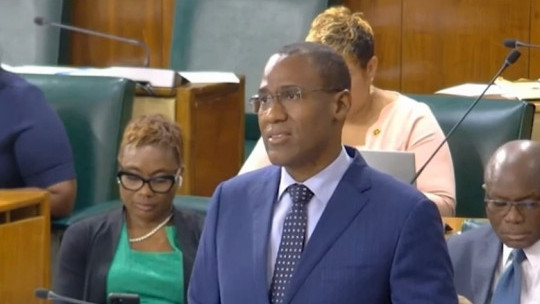
Finance Minister Dr. Nigel Clarke says the government is still conducting an assessment of the effects of Hurricane Beryl on the economy.
Central Jamaica, particularly parishes along the southern belt, were devastated by the hurricane which left a trail of damage to homes, hospitals, farms, schools, roads and other infrastructure.
Speaking in the House of Representatives on Tuesday afternoon, Dr. Clarke sought to assure that the administration has secured the necessary financing to deal with the recovery programme.
"Madam Speaker, we have been informed by the Caribbean Catastrophe Risk Insurance Facility that Jamaica's tropical cyclone and excess rainfall policies have triggered, with payout amounts of US$16.3 million and US$10 million respectively, which represents J$2.5 billion and J$1.6 billion," he announced.
"Madam Speaker, the path of and intensity of Hurricane Beryl did not trigger Jamaica's catastrophe bond, as such disaster risk financing resources available to the government due to the pre-financing of disaster risk totals approximately $10.9 billion, made up of $5.3 billion in the contingencies; $4.1 billion from CCRIF, which is to come; $1 billion, which we had budgeted for the National Natural Disaster Risk Fund; and National Disaster Fund of $500 million," the minister added.
Dr. Clarke said the government intends to tap $5 billion from its Disaster Risk Management resources to tackle the crisis caused by Beryl.
"We plan to disburse $1.3 billion to the Ministry of Economic Growth and Job Creation to finance programmes announced by The Most Honourable Prime Minister last week. And we plan to disburse $1 billion to the Ministry of Labour and Social Security from these resources to finance the programmes that the Minister of Labour will shortly describe and detail. And we, as I mentioned, we'll disburse up to $5 billion from these resources."
He noted that any expenditure beyond the $5 billion that falls into this fiscal year will be financed from the proceeds of donations.
Dr. Clarke said the government is mindful that it is still early in the hurricane season, therefore it has to manage the distribution of the funds available for disaster recovery.
The United Nations, the United States government and a number of multi-lateral partners have pledged to donate nearly US$1 billion to the recovery programme.
Economic setback
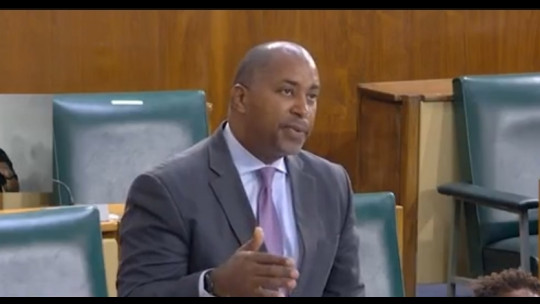
Meanwhile, Opposition Spokesman on Finance Julian Robinson argued the government's economic programme has suffered a serious setback due to Hurricane Beryl, and suggeted that the administration will have to find new sources of funding for the budget, despite the confidence expressed by the Finance Minister.
"You have made a decision not to draw down or borrow any funds to finance the expenditures that are related to Beryl. So the monies would have to therefore come from the what was programmed in the capital budget for the 2024-25 year," he reasoned.
With preliminary estimates suggesting about $45 billion in damage, Mr. Robinson sought to find out from Dr. Clarke what projects or programmes the monies would likely be reallocated from to plug the "$30 to $35 billion" gap.
Additionally, he questioned whether there were funds available in the Ministry of Education to get schools ready for reopening by September.
Dr. Clarke did not say which specific sums would be allocated.
He pointed out that reconstructions activities will have to take place over time.
Education, he said, will be prioritised so that students can go back to school on schedule.
comments powered by Disqus





 All feeds


